Parent guide · Grade 3 Math · Unit 8
Lesson 8.2 Grams, Kilograms, Liters
Written for the parent. Read the Say this lines aloud as they are, or in your own words. Answers for you are marked Listen for.
At a glance
- Time
- 5 sessions of 25–30 minutes
- Goal
- Use grams, kilograms and liters.
- You need
- Craft sticks and rubber bands
- Pencil and crayons
- Worksheet A · Worksheet B · the lesson page
Steps
Do this: Ask these out loud. Your child answers out loud; no paper needed.
- Ask: “2 × 3” Listen for: 6
- Ask: “4 × 10” Listen for: 40
- Ask: “5 × 8” Listen for: 40
- Ask: “3 × 10” Listen for: 30
- Ask: “8 × 6” Listen for: 48
Say this: “A kilogram is about the mass of a large book; a liter fills a big water bottle.”
Say this: “Add and subtract masses and volumes like any other numbers, keeping the units.”
Say this: “Gram (g): about the mass of a paper clip.”
Say this: “Kilogram (kg): 1,000 grams.”
Say this: “Liter (l): a little more than a quart.”
Show: Noah led 797 sheep into the ark, then 739 more. How many sheep went in?
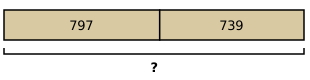
Say this: “Unknown: the total.”
Say this: “Bar model: two parts, 797 and 739; the whole is unknown.”
Say this: “Equation: 797 + 739 = ?”
Say this: “797 + 739 = 1,536”
Say this: “Answer: 1,536 sheep went into the ark.”
Answer: 1,536 sheep. 1,536 sheep went into the ark.
Show: A farmer plants 36 seeds in 6 equal rows. How many seeds are in each row?
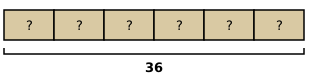
Say this: “Unknown: the size of each group.”
Say this: “Bar model: the whole is 36, cut into 6 equal parts.”
Say this: “Equation: 36 ÷ 6 = ?”
Say this: “36 ÷ 6 = 6”
Say this: “Answer: Each row has 6 seeds.”
Answer: 6 seeds. Each row has 6 seeds.
Do this: Your child does these with you. Let them try first; help only after a real try.
Ask: 3 kilograms = ___ grams
Listen for: 3,000
If stuck: 1 kilogram = 1,000 grams, so multiply by 1,000.
Ask: 5 kilograms = ___ grams
Listen for: 5,000
If stuck: 1 kilogram = 1,000 grams, so multiply by 1,000.
Ask: 6 kilograms = ___ grams
Listen for: 6,000
If stuck: 1 kilogram = 1,000 grams, so multiply by 1,000.
7 more practice items on the lesson page, and on Worksheet A and Worksheet B.
- Forgetting units.
Weigh five kitchen items in grams. Order them lightest to heaviest. Estimate first, then weigh.
Say this: “Tell me what you learned today. Show me with your hands or the counters if you like.”
Listen for: Use grams, kilograms and liters.
Fact drill. Recite: 60 minutes = 1 hour, 1,000 grams = 1 kilogram, 1,000 milliliters = 1 liter.
Spread over the week
5 sessions of 25–30 minutes. Stop while it is still going well.
- Session 1. Warm-up, then teach the new idea (steps 1 and 2).
- Session 2. Warm-up again, then show how with the examples.
- Session 3. Practice together, then play the game.
- Session 4. More practice on the worksheet, and the daily habit.
- Session 5. Quick check: narration and a few practice items. Move on when it is mostly right.